
If you search “What is the function of an AHU?”, you’ll often find simplified explanations: an Air Handling Unit (AHU) conditions and circulates air within an HVAC system. While technically correct, this barely scratches the surface of what an AHU actually does in modern commercial and industrial buildings.
An AHU is not simply a box with fans and filters. It is the central environmental control hub of a building, responsible for temperature regulation, humidity control, air filtration, ventilation balance, and increasingly, energy optimisation and carbon reduction.
More importantly, the real performance of an AHU depends not only on its mechanical components, but on the AHU controls strategy that governs it.
In this comprehensive guide, we explore:
- The full technical function of an AHU
- Key components and how they work together
- The role of AHUs in energy efficiency and compliance
- How advanced AHU controls dramatically improve cost and performance
- Why control expertise is essential in modern HVAC systems
Table of Contents
- What Is an AHU?
- What Is the Function of an AHU in HVAC Systems?
- Core Components That Enable AHU Functionality
- Types of AHUs and Their Applications
- How AHUs Improve Energy Efficiency
- The Critical Role of AHU Controls
- AHU Controls, Compliance and Smart Buildings
- Common AHU Design & Performance Mistakes
- FAQs: What Is the Function of an AHU?
- Conclusion
1. What Is an AHU?
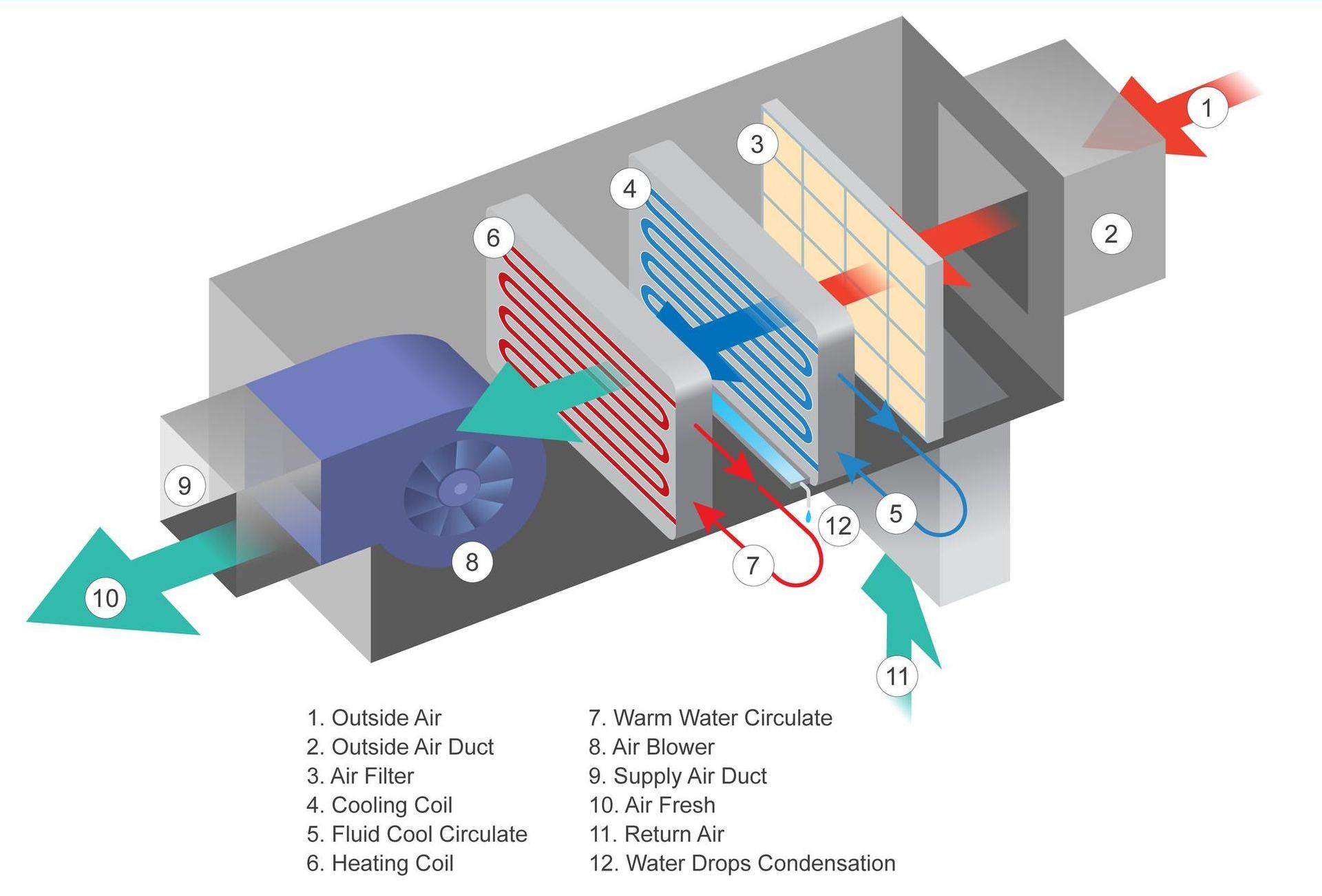
An Air Handling Unit (AHU) is a central HVAC device that:
- Conditions air (heating, cooling, humidifying, dehumidifying)
- Filters contaminants
- Regulates airflow
- Maintains indoor environmental quality
- Distributes treated air via ductwork
AHUs are typically installed in:
- Commercial offices
- Hospitals
- Data centres
- Educational facilities
- Industrial buildings
- Retail centres
They are often located in plant rooms, rooftops, or service areas.
2. What Is the Function of an AHU in HVAC Systems?
The function of an AHU goes far beyond “moving air”.
The Core Functions of an AHU:
1. Temperature Control
Heating coils (LTHW or electric) and cooling coils (chilled water or DX) regulate supply air temperature.
2. Air Filtration
Filters remove dust, pollutants, bacteria and particulates. Modern systems comply with ISO 16890 standards for filter efficiency.
3. Ventilation & Fresh Air Management
AHUs balance fresh air intake and exhaust air extraction to maintain healthy indoor air quality.
4. Humidity Control
In critical environments, AHUs manage relative humidity using humidifiers or dehumidification coils.
5. Air Distribution
Fans supply conditioned air to occupied spaces at controlled volumes and pressures.
6. Pressure & Zoning Control
AHUs help maintain pressure differentials in hospitals, laboratories and cleanrooms.
In modern buildings, the AHU is responsible for maintaining:
- Thermal comfort
- Indoor air quality (IAQ)
- Regulatory compliance
- Energy efficiency
3. Core Components That Enable AHU Functionality
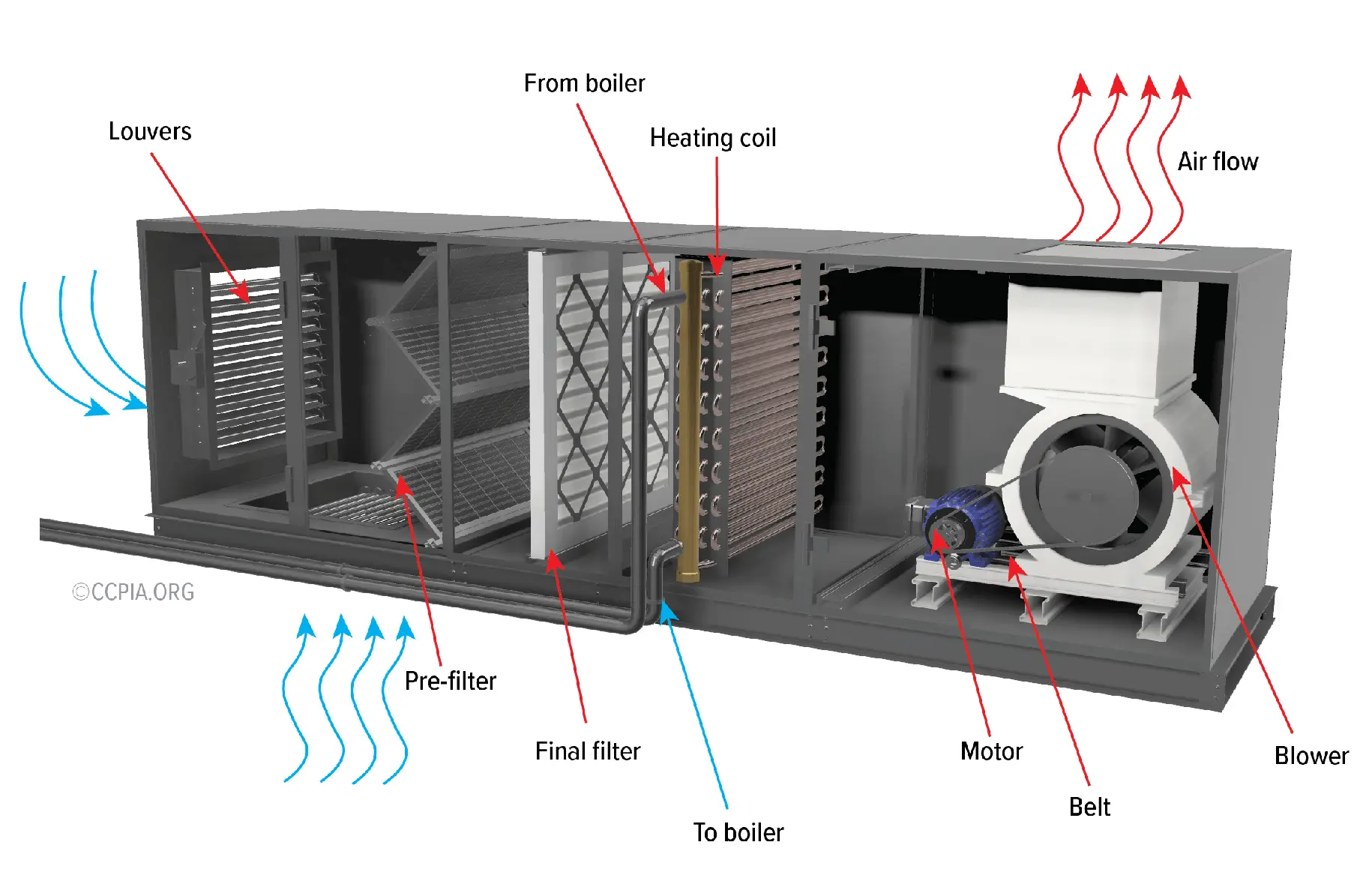
The function of an AHU depends on its integrated components:
- Supply and extract fans
- Heating and cooling coils
- Filter sections
- Dampers and mixing boxes
- Heat recovery sections
- Humidifiers
- Sensors (temperature, pressure, CO₂)
Each component must operate in harmony to ensure system efficiency.
However, even the best components cannot perform optimally without intelligent control logic.
4. Types of AHUs and Their Applications
Modular AHUs
Custom-built units for large commercial or industrial installations.
Packaged AHUs
Factory-assembled units used in medium-sized applications.
Rooftop AHUs
Weatherproof units designed for external installation.
Hygienic AHUs
Designed for healthcare and pharmaceutical environments.
Energy Recovery AHUs
Incorporate heat recovery sections for improved efficiency.
The function of an AHU varies slightly depending on its application, but performance always depends on the control system.
5. How AHUs Improve Energy Efficiency
Modern AHUs reduce energy consumption through:
- Heat recovery systems
- Variable speed fan control
- Demand-controlled ventilation
- Efficient filtration systems
- Optimised coil design
However, energy savings are only realised when the AHU operates under intelligent control.
Fan energy alone can account for a significant proportion of building electrical load. Through variable speed drives (VSDs), fan energy can be reduced dramatically, following the cube law relationship between airflow and power.
Without variable speed control, AHUs frequently operate inefficiently at full capacity.
6. The Critical Role of AHU Controls
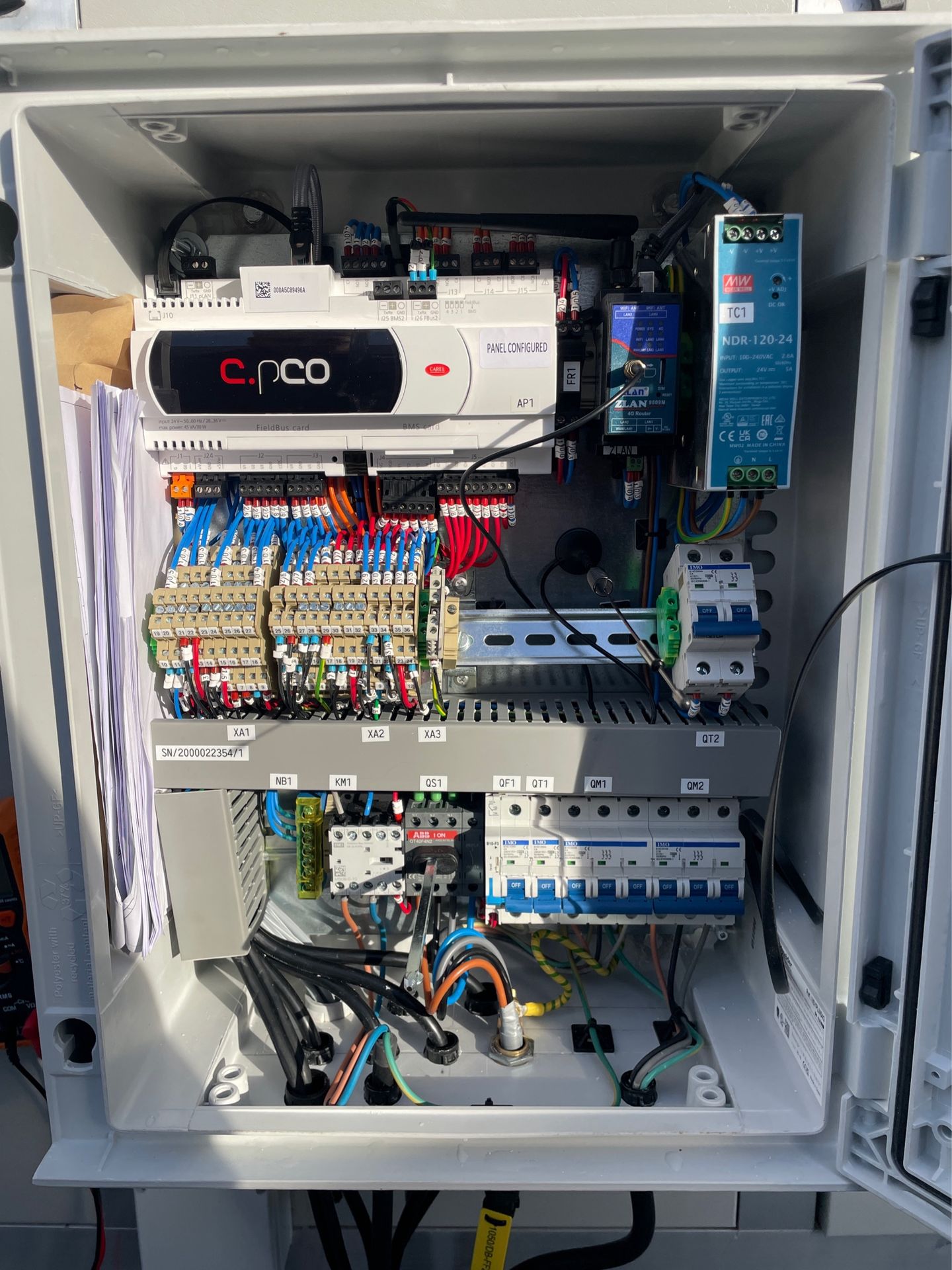
The mechanical AHU performs physical conditioning but the AHU controls system determines performance, efficiency and compliance.
Advanced AHU controls manage:
- Fan speed modulation
- Temperature setpoints
- Frost protection
- Bypass dampers
- Pressure monitoring
- CO₂-based demand ventilation
- Communication with Building Management Systems (BMS)
Why AHU Controls Matter
Poor control strategies can result in:
- Simultaneous heating and cooling
- Over-ventilation
- Excessive fan energy use
- Premature equipment wear
- Failed compliance assessments
Advanced control systems using components from manufacturers such as Belimo (actuators), Danfoss (VSDs), Sontay (sensors), and Siemens (controllers) enable precise optimisation.
Our AHU Controls Expertise
At iACS, we specialise in:
- AHU control panel manufacturing
- Bespoke HVAC control strategies
- BMS integration
- Energy optimisation upgrades
- Supply of over 6000 HVAC control components
We do not simply wire panels, we design control strategies that:
- Reduce operational costs
- Improve seasonal efficiency
- Enhance compliance
- Provide measurable ROI
Our ecommerce platform provides fast access to industry-leading components, while our control expertise ensures systems perform as intended.
In modern HVAC design, control quality often determines whether projected energy savings are achieved.
7. AHU Controls, Compliance and Smart Buildings
In the UK, AHUs must meet increasingly strict standards under:
- Part L Building Regulations
- SBEM modelling
- BREEAM assessments
- Net-zero carbon frameworks
Advanced AHU controls enable:
- Accurate airflow modulation
- Energy monitoring
- Performance reporting
- Remote diagnostics
Smart buildings rely on intelligent AHU controls integrated via BACnet or Modbus protocols.
Without proper controls, an AHU cannot demonstrate compliance performance.
8. Common AHU Design & Performance Mistakes
- Oversized fans running at constant speed
- Poorly commissioned temperature sensors
- Lack of CO₂-based demand control
- Inadequate frost protection logic
- No BMS integration
- Incorrect damper positioning
Most of these issues stem from control strategy, not mechanical design.
9. FAQs: What Is the Function of an AHU?
What is the main function of an AHU?
The main function of an AHU is to condition, filter and distribute air while maintaining temperature, humidity and air quality within a building.
How does an AHU improve indoor air quality?
Through filtration, controlled ventilation and humidity regulation.
Does an AHU reduce energy costs?
Yes, particularly when combined with heat recovery and advanced AHU controls that optimise airflow and temperature.
What is the difference between an AHU and an HVAC system?
The AHU is a component of the wider HVAC system responsible for air treatment and distribution.
Why are AHU controls important?
AHU controls determine efficiency, prevent energy waste, enable compliance and ensure reliable operation.
Conclusion: The True Function of an AHU Lies in Intelligent Control
The function of an AHU extends far beyond simply moving air. It is the environmental backbone of modern buildings, responsible for comfort, health, efficiency and compliance.
However, the real-world performance of any air handling unit depends on intelligent AHU controls.
By combining high-quality components with advanced control strategies, buildings can:
- Reduce energy consumption
- Lower operational costs
- Improve indoor air quality
- Achieve regulatory compliance
- Support net-zero targets
In today’s performance-driven building environment, understanding the function of an AHU means understanding the importance of control.