
Heating, ventilation and air conditioning (HVAC) systems rely on more than just mechanical equipment. While chillers, boilers, air handling units (AHUs) and fan coil units (FCUs) perform the physical heating and cooling, the true intelligence of a building lies within its HVAC control system.
An HVAC control system monitors environmental conditions, processes real-time data, and adjusts equipment operation to maintain comfort, efficiency and compliance.
In this in-depth guide, we’ll explain:
- What an HVAC control system is
- How HVAC control systems work step-by-step
- The core components of an HVAC control system
- Types of HVAC control strategies
- The role of Building Management Systems (BMS)
- How control panels optimise AHU and plant performance
- Why intelligent controls reduce energy costs
Table of Contents
- What Is an HVAC Control System?
- How Does an HVAC Control System Work?
- Core Components of an HVAC Control System
- Types of HVAC Control Systems
- HVAC Control Panels Explained
- HVAC Controls & Energy Efficiency
- HVAC Control Systems & BMS Integration
- Common HVAC Control Issues
- FAQs: HVAC Control Systems
- Conclusion
1. What Is an HVAC Control System?
An HVAC control system is the automated network of sensors, controllers, actuators and software that regulates:
- Temperature
- Humidity
- Airflow
- Indoor air quality
- Pressure levels
- Energy consumption
It ensures that HVAC equipment operates efficiently while maintaining occupant comfort.
Without a control system, HVAC equipment would run continuously or manually, leading to energy waste and inconsistent environmental conditions.
2. How Does an HVAC Control System Work?
At its core, an HVAC control system follows a simple loop:
- Sense – Sensors measure environmental conditions.
- Compare – The controller compares real conditions to desired setpoints.
- Act – Actuators adjust equipment operation.
- Monitor – The system continuously evaluates performance.
Step 1: Sensors Collect Data
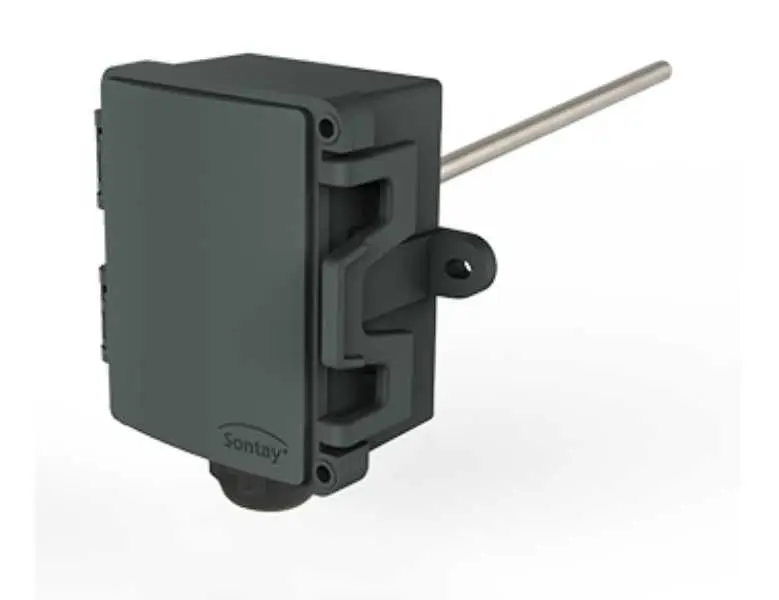
Sensors measure:
- Air temperature
- Water temperature
- CO₂ levels
- Relative humidity
- Static pressure
- Differential pressure
Manufacturers such as Sontay provide accurate environmental sensing solutions essential for reliable HVAC control.
Step 2: Controller Processes Information
The controller (PLC or digital controller) compares sensor readings with programmed setpoints.
For example:
- Desired room temperature: 21°C
- Measured temperature: 23°C
The controller sends a signal to reduce heating or increase cooling.
Controllers from Siemens and Schneider Electric are widely used in commercial HVAC applications.
Step 3: Actuators Adjust Equipment
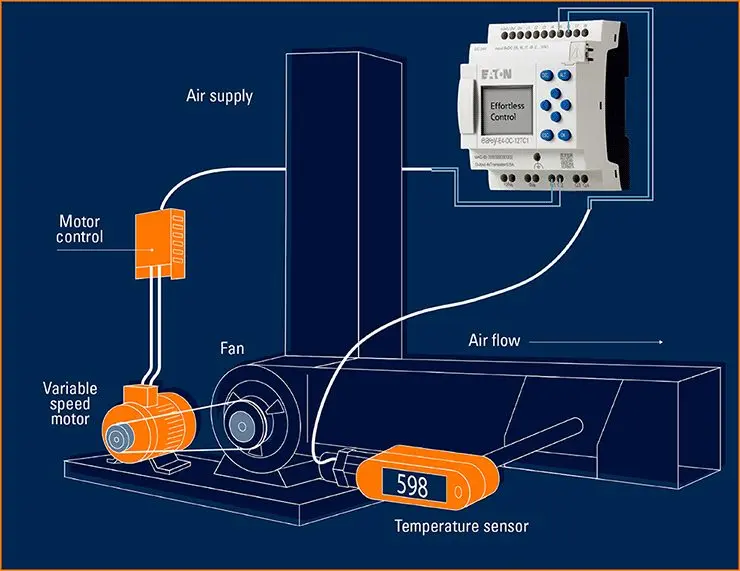
Actuators physically adjust components such as:
- Damper blades
- Control valves
- Fan speeds
- Pump speeds
For example:
- A valve actuator modulates chilled water flow.
- A damper actuator adjusts fresh air intake.
- A VSD reduces fan speed.
Belimo actuators and Danfoss variable speed drives are commonly integrated into HVAC control systems.
Step 4: Continuous Feedback Loop
The HVAC control system constantly rechecks sensor data to ensure stable operation.
This feedback loop enables:
- Precise temperature control
- Demand-based ventilation
- Energy optimisation
- Fault detection
3.
Core Components of an HVAC Control System
An HVAC control system typically includes:
- Sensors (temperature, pressure, humidity, CO₂)
- Controller (PLC or DDC controller)
- Actuators (dampers, valves)
- Variable Speed Drives (VSDs)
- Control panel enclosure
- Communication interfaces (BACnet, Modbus)
Each component plays a role in maintaining performance and efficiency.
4. Types of HVAC Control Systems
1. Standalone Controls
Basic thermostat-based systems controlling single units.
2. Direct Digital Controls (DDC)
Microprocessor-based controllers offering programmable logic.
3. Building Management Systems (BMS)
Centralised platforms that integrate multiple HVAC systems across a building.
Modern commercial facilities typically rely on DDC integrated with BMS platforms.
5. HVAC Control Panels Explained
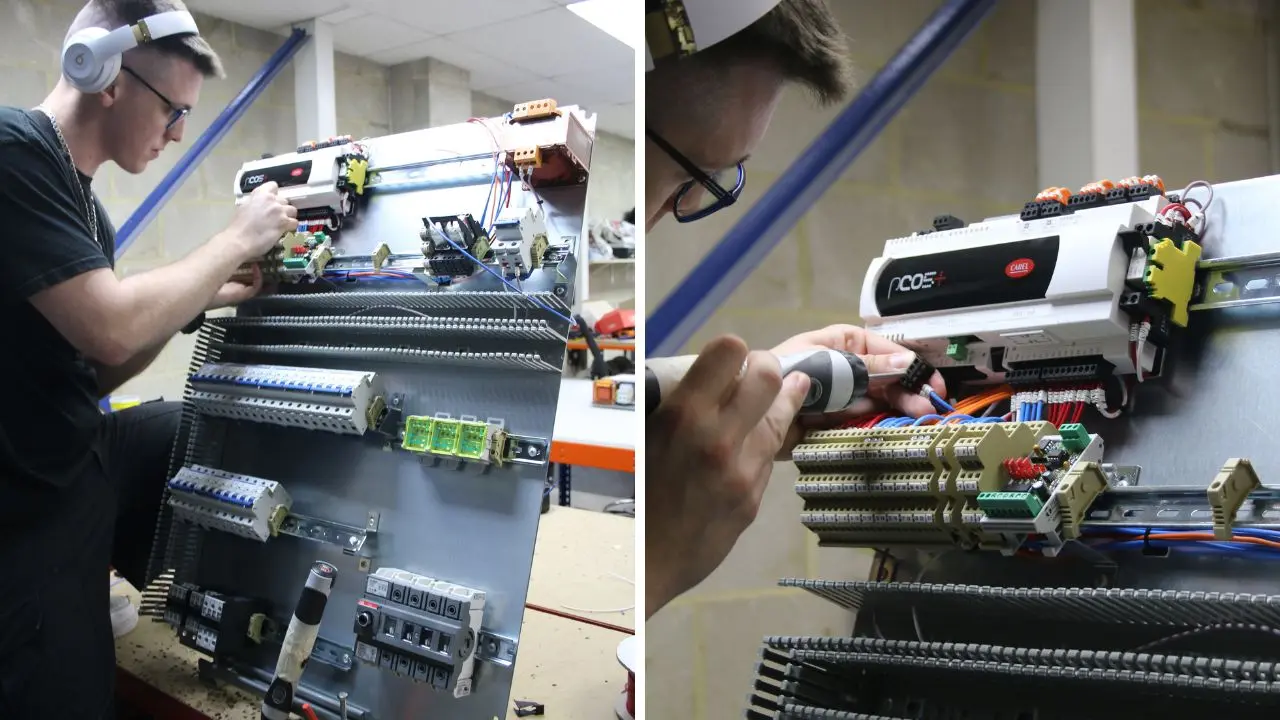
An HVAC control panel houses the electrical and automation components required to manage HVAC equipment.
What’s Inside an HVAC Control Panel?
- PLC or digital controller
- Power supplies
- Contactors & relays
- VSDs
- Circuit protection devices
- Terminal blocks
- Communication modules
Control panels are designed to:
- Coordinate AHU operation
- Sequence chillers and boilers
- Modulate pumps and fans
- Provide safety interlocks
- Interface with BMS systems
Well-designed panels reduce wiring complexity and improve long-term reliability.
6. HVAC Controls & Energy Efficiency
Energy efficiency is where HVAC control systems deliver the greatest value.
Advanced control strategies include:
- Variable air volume (VAV) control
- Static pressure reset
- Chilled water temperature reset
- Demand-controlled ventilation (CO₂-based)
- Optimised start/stop scheduling
- Night setback strategies
Fan energy, pump energy and plant efficiency can be significantly improved through variable speed control.
Because power consumption follows the cube law:
- Reducing fan speed by 20% can cut energy usage by nearly 50%.
Without intelligent control, HVAC systems often operate inefficiently at full load.
7. HVAC Control Systems & BMS Integration
A Building Management System (BMS) integrates multiple HVAC control systems into a single monitoring platform.
BMS functionality includes:
- Real-time monitoring
- Alarm notifications
- Energy reporting
- Trend analysis
- Remote diagnostics
Integration allows facility managers to:
- Identify inefficiencies
- Adjust schedules
- Improve compliance reporting
- Reduce reactive maintenance
8. Common HVAC Control Issues
- Poor sensor calibration
- Incorrect setpoint configuration
- Lack of VSD integration
- Simultaneous heating and cooling
- Communication failures with BMS
- Inadequate commissioning
Many performance issues stem from control misconfiguration rather than mechanical faults.
9. FAQs: HVAC Control Systems
What is the main purpose of an HVAC control system?
To maintain indoor environmental conditions while minimising energy consumption.
How do HVAC controls reduce energy costs?
Through variable speed control, demand-based ventilation and intelligent scheduling.
What is the difference between DDC and BMS?
DDC controls individual equipment, while BMS integrates multiple systems across a building.
Why are control panels important?
Control panels house and organise the components that regulate HVAC equipment safely and efficiently.
Conclusion: HVAC Control Systems Are the Intelligence Behind Performance
An HVAC control system is the brain of any heating and cooling installation. It ensures that mechanical equipment operates efficiently, safely and in line with environmental targets.
From sensors and actuators to PLCs and BMS integration, modern HVAC controls are essential for:
- Energy efficiency
- Carbon reduction
- Regulatory compliance
- Operational reliability
- Occupant comfort
In today’s performance-driven buildings, understanding how an HVAC control system works is fundamental to delivering sustainable and cost-effective climate control.