
Air Handling Units (AHUs) are the backbone of commercial and industrial HVAC systems. Whether installed in offices, hospitals, airports, manufacturing facilities or data centres, AHUs are responsible for maintaining indoor air quality (IAQ), regulating temperature and delivering consistent airflow across large spaces.
While many overviews explain that AHUs “heat, cool and distribute air,” the true depth of AHU engineering goes far beyond that. Modern AHUs are sophisticated environmental control systems designed to meet strict efficiency standards, air quality regulations and carbon reduction targets.
In this comprehensive guide, we will explore:
- What an AHU is and how it works
- Key AHU components in detail
- Different types of AHUs and their applications
- Energy efficiency considerations
- Common design and commissioning challenges
- How AHUs are controlled using advanced control panels
Table of Contents
- What Is an Air Handling Unit (AHU)?
- How Does an AHU Work?
- Main Components of an AHU
- Types of AHUs in Commercial Applications
- Energy Efficiency & Performance Factors
- How AHUs Are Controlled Using Control Panels
- Common AHU Design & Operational Challenges
- FAQs About AHUs
- Conclusion
1.
What Is an Air Handling Unit (AHU)?
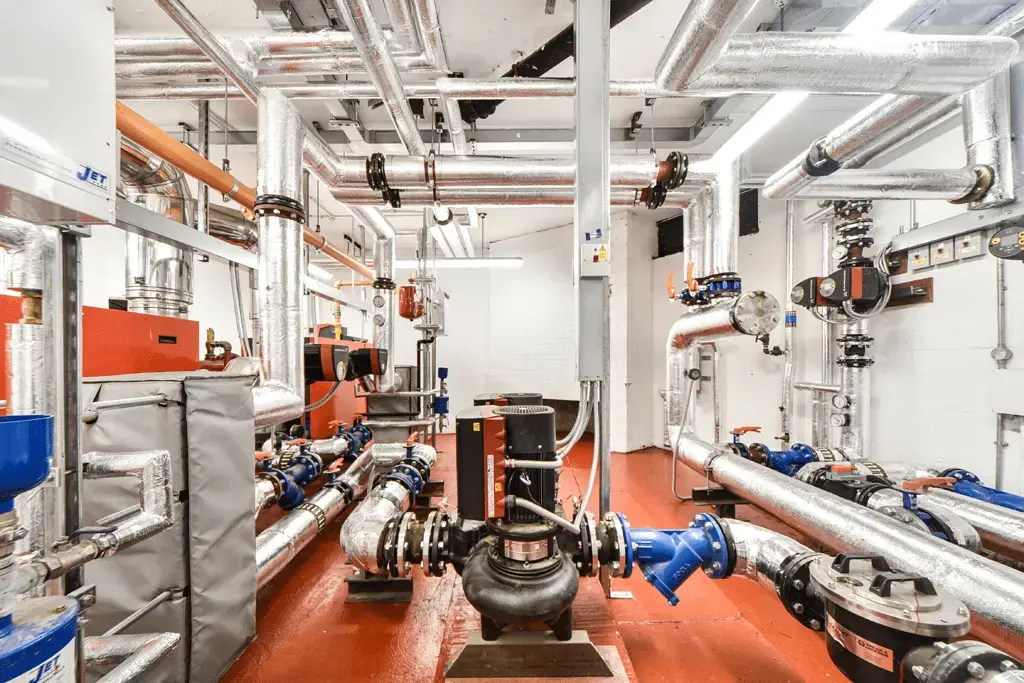
An Air Handling Unit (AHU) is a large metal enclosure containing mechanical and electrical components that:
- Circulate air
- Heat or cool air
- Filter contaminants
- Control humidity
- Maintain ventilation rates
AHUs are typically installed in:
- Plant rooms
- Rooftops
- Service floors
- Dedicated mechanical spaces
They form part of a wider HVAC system, often working alongside chillers, boilers, heat pumps or heat recovery systems.
2. How Does an AHU Work?
To understand AHU operation, follow the airflow path:
Step 1: Air Intake & Mixing
Fresh outdoor air and return air enter a mixing chamber. Motorised dampers regulate the ratio of fresh to recirculated air to maintain indoor air quality while optimising energy efficiency.
Step 2: Filtration
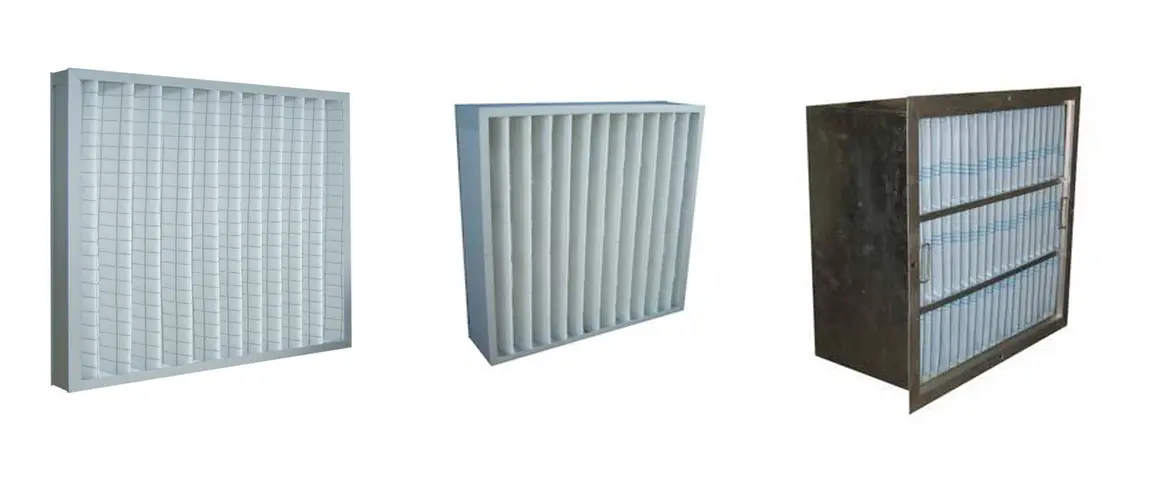
Air passes through pre-filters and fine filters to remove:
- Dust
- Particulates
- Pollen
- Airborne contaminants
Modern systems often comply with ISO 16890 filtration standards.
Step 3: Heating & Cooling
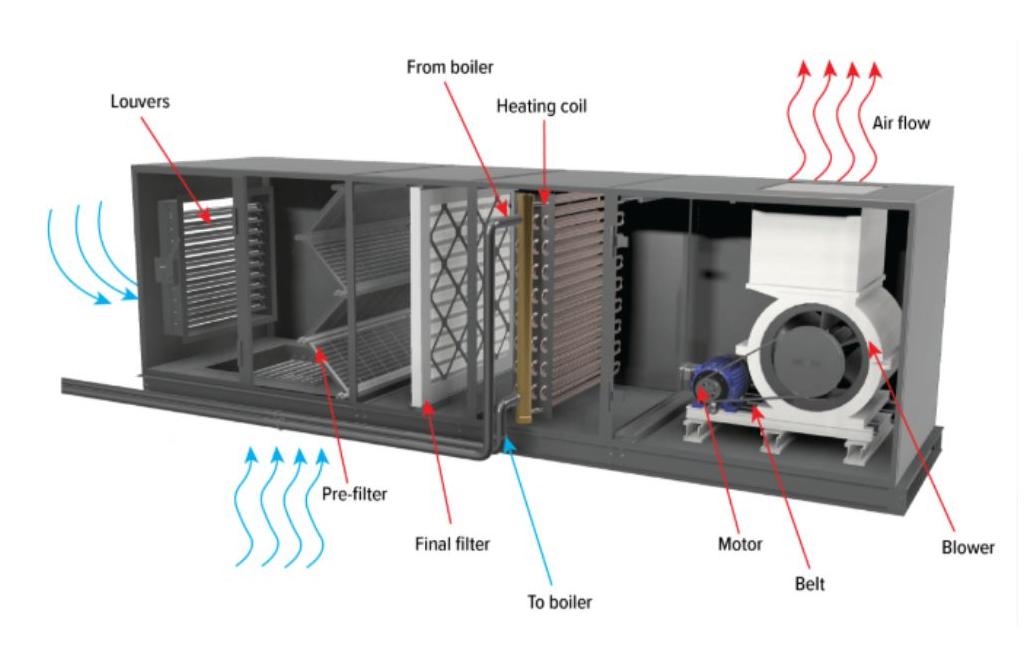
Air moves across heating or cooling coils:
- Cooling coils use chilled water or DX refrigerant.
- Heating coils use LTHW, electric or steam.
Heat transfer occurs between the coil surface and the air, adjusting supply air temperature.
Step 4: Air Movement & Distribution
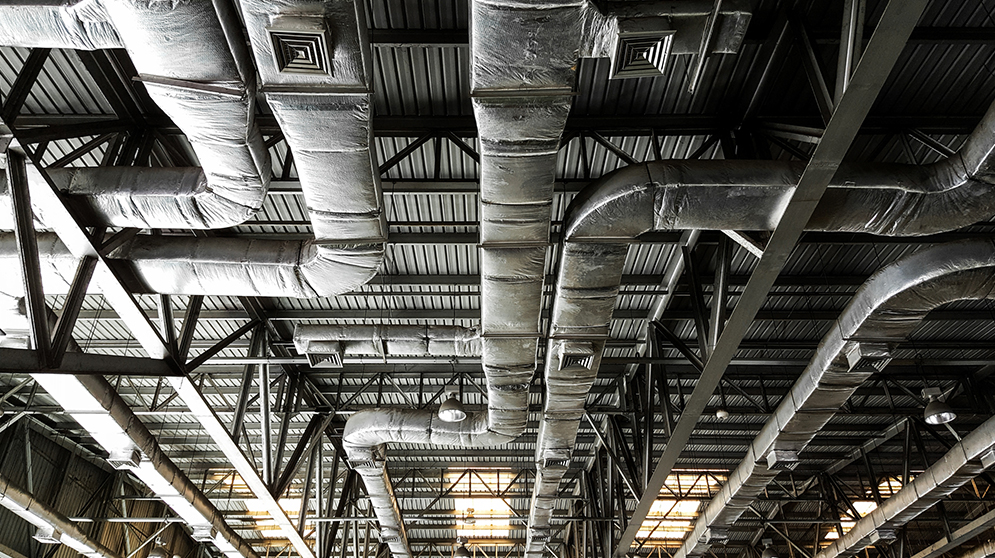
Many AHUs include:
- Plate heat exchangers
- Thermal wheels
- Run-around coils
Heat recovery improves energy efficiency by reclaiming thermal energy from exhaust air.
3. Main Components of an AHU
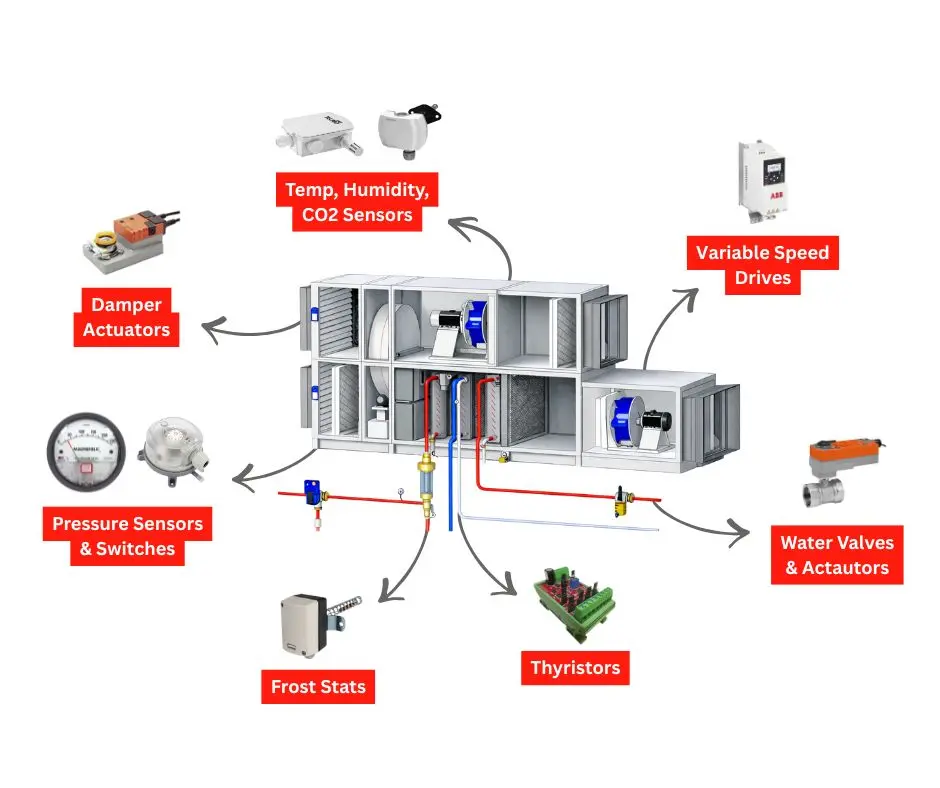
A typical AHU includes:
- Mixing box with dampers
- Filtration section
- Heating coil
- Cooling coil
- Heat recovery system (optional)
- Humidifier (if required)
- Supply and return fans
- Sensors (temperature, pressure, CO₂)
Each component plays a role in maintaining indoor comfort and air quality.
4.
Types of AHUs in Commercial Applications
Modular AHUs
Custom-built systems for large-scale commercial or industrial facilities.
Packaged AHUs
Pre-assembled factory units.
Rooftop AHUs
Designed for external installation to save internal space.
Hygienic AHUs
Used in hospitals and pharmaceutical environments where strict hygiene standards apply.
5. Energy Efficiency & Performance Factors
AHU performance directly affects building energy consumption.
Key efficiency drivers include:
- Specific Fan Power (SFP)
- Heat recovery efficiency
- Air leakage rates
- Pressure drop across filters
- Variable speed fan control
Fan energy can represent a significant portion of HVAC consumption. Because fan power follows the cube law, reducing airflow slightly can significantly reduce energy use.
Heat recovery systems also reclaim thermal energy from exhaust air, reducing heating demand.
6. How AHUs Are Controlled
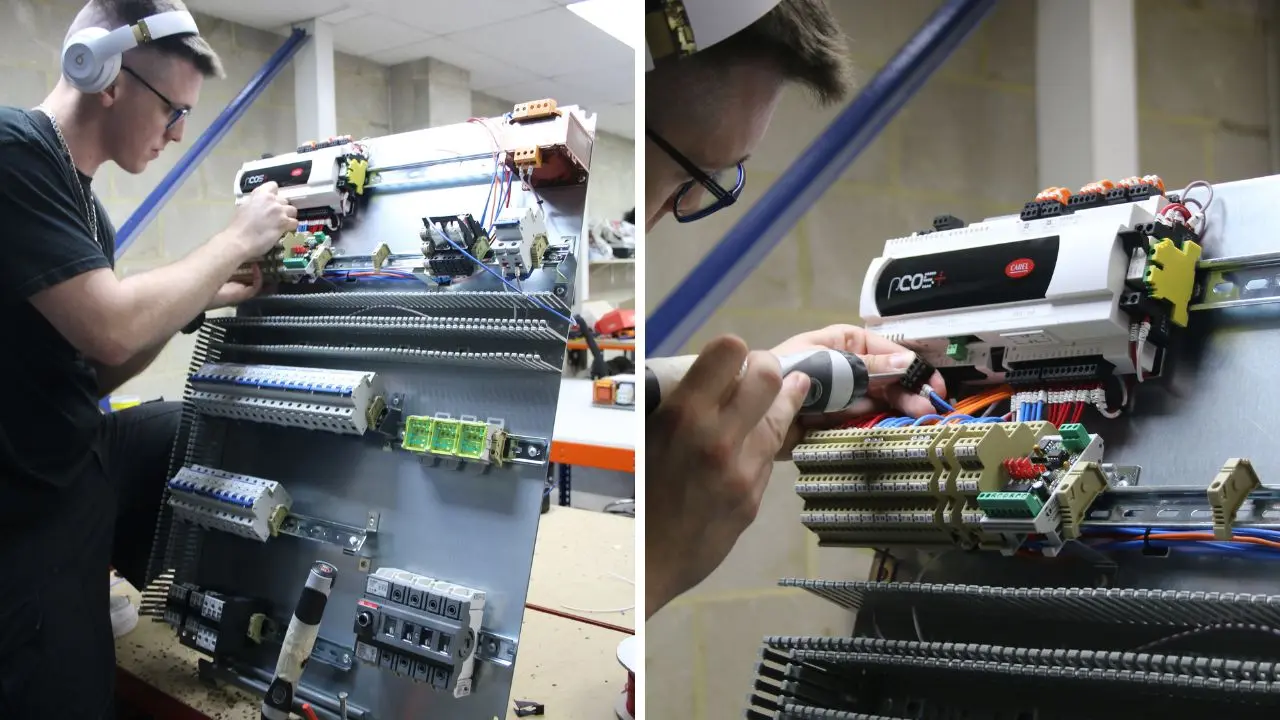
While mechanical components enable air treatment, the control panel determines how efficiently the AHU operates.
An AHU control panel manages:
- Fan speed via Variable Speed Drives (VSDs)
- Heating and cooling valve modulation
- Damper positioning
- Static pressure control
- Frost protection
- Supply air temperature regulation
- CO₂-based demand ventilation
-
Communication with Building Management Systems (BMS)
Key Control Panel Components
- PLC or digital controller
- VSDs
- Temperature sensors
- Pressure sensors
- CO₂ sensors
- Actuators for dampers and valves
- Safety interlocks
Leading manufacturers such as Danfoss (VSDs), Belimo (actuators), Sontay (sensors), and Siemens (controllers) provide essential components used within AHU control panels.
Why AHU Control Panels Are Essential
Without intelligent control:
- Fans may run at constant speed
- Energy is wasted through over-ventilation
- Simultaneous heating and cooling may occur
- Compliance targets may not be met
Advanced control panels enable:
- Demand-controlled ventilation
- Static pressure reset strategies
- Temperature reset optimisation
- Energy monitoring and diagnostics
- Improved seasonal efficiency
In modern commercial buildings, the control strategy often determines whether projected energy savings are achieved.
7. Common AHU Design & Operational Challenges
- Incorrect sizing leading to inefficiency
- Poor sensor calibration
- Inadequate commissioning
- High filter pressure drop
- Lack of integration with BMS
Many performance issues stem from control configuration rather than mechanical failure.
8. FAQs About AHUs
What does an AHU do?
An AHU conditions and distributes air while maintaining ventilation, temperature and indoor air quality.
How does an AHU cool air?
By transferring heat from air to chilled water or refrigerant via a cooling coil.
Why are control panels important in AHUs?
Control panels regulate airflow, temperature and energy use to ensure efficient operation.
Can upgrading AHU controls improve efficiency?
Yes. Retrofitting advanced control panels can significantly reduce energy consumption without replacing the entire unit.
9. Conclusion: AHUs Combine Mechanical Engineering with Intelligent Control
Air Handling Units are central to maintaining comfort and air quality in commercial buildings. Their effectiveness depends on well-designed mechanical components working in harmony with intelligent control systems.
While fans, coils and filters perform the physical air treatment, it is the AHU control panel that ensures:
- Efficient operation
- Reduced energy consumption
- Compliance with regulations
- Reliable long-term performance
Understanding both the mechanical and control aspects of AHUs is essential for delivering high-performance HVAC systems.