
Many blogs explain how chillers, AHUs and RTUs work together in simple terms:
- The chiller produces chilled water
- The AHU uses it to cool air
- The RTU is a packaged system
While accurate at a basic level, this explanation overlooks the critical engineering principles that determine real-world efficiency, compliance and operating cost.
In modern commercial buildings, HVAC systems are not just mechanical assemblies — they are dynamic, controlled energy networks. The interaction between chillers, pumps, air handling units (AHUs), rooftop units (RTUs), and building management systems (BMS) determines whether a building performs efficiently or wastes energy.
This guide provides a deeper, engineering-level understanding of:
- How chillers, AHUs and RTUs function individually
- How they integrate within a chilled water system
- The role of pumping strategies
- The importance of control logic
- Energy optimisation techniques
- UK compliance implications
- Why HVAC controls are critical to system performance
Table of Contents
- Overview: Chiller, AHU and RTU Roles in HVAC
- How a Chiller Works in Commercial HVAC
- How an AHU Uses Chilled Water to Condition Air
- How RTUs Differ from Chilled Water Systems
- The Hidden Energy Drivers: Pumps, Fans & Control Strategy
- Advanced HVAC Control & System Optimisation
- Energy Efficiency & Compliance Considerations
- Common Design & Commissioning Mistakes
- FAQs: Chillers, AHUs and RTUs Explained
- Conclusion
1. Overview: Chiller, AHU and RTU Roles in HVAC
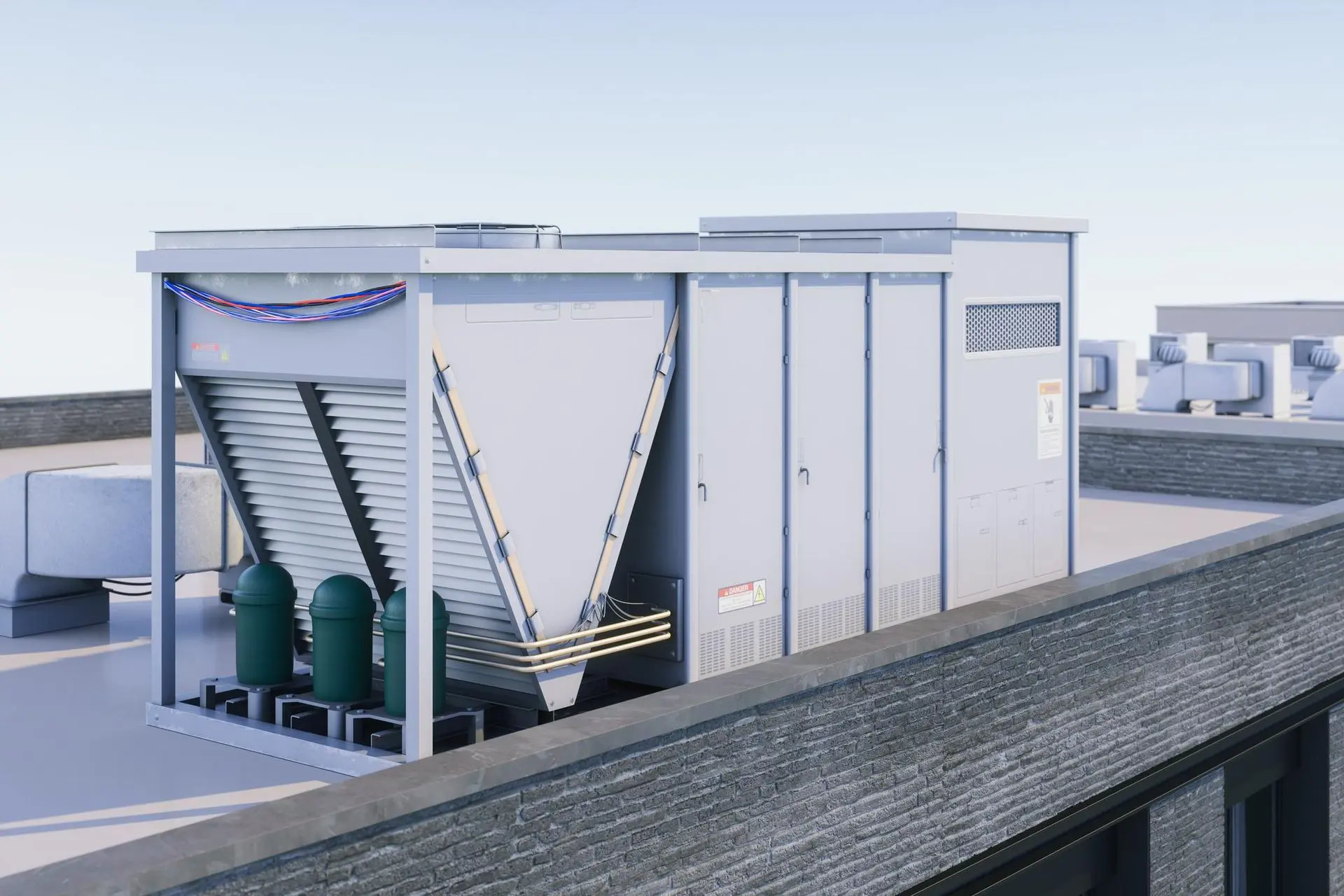
In a typical chilled water HVAC system:
- The chiller removes heat from water.
- The pump system circulates chilled water.
- The AHU transfers heat from air to chilled water.
- The building space is cooled via ducted air distribution.
An RTU, by contrast, combines refrigeration components and air handling into one packaged rooftop unit.
The key difference lies in centralised chilled water production versus decentralised direct expansion (DX) cooling.
2. How a Chiller Works in Commercial HVAC
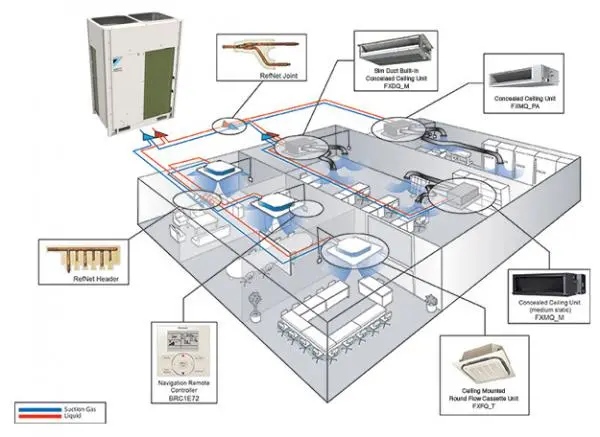
A chiller removes heat from water via a vapour compression or absorption refrigeration cycle.
Main Chiller Components:
- Compressor
- Evaporator
- Condenser
-
Expansion valve
Cooling Process:
- Warm return water from the building enters the evaporator.
- Refrigerant absorbs heat and evaporates.
- The compressor raises refrigerant pressure.
- Heat is rejected via the condenser.
- Cooled water returns to the building.
Chillers are commonly:
- Air-cooled
-
Water-cooled (with cooling towers)
Energy Insight
Chillers are often the largest energy consumers in commercial buildings. Their efficiency depends on:
- Compressor staging
- Condenser water temperature
- Part-load performance
- Variable speed drive (VSD) control
Poor sequencing can increase energy consumption significantly.
3. How an AHU Uses Chilled Water to Condition Air
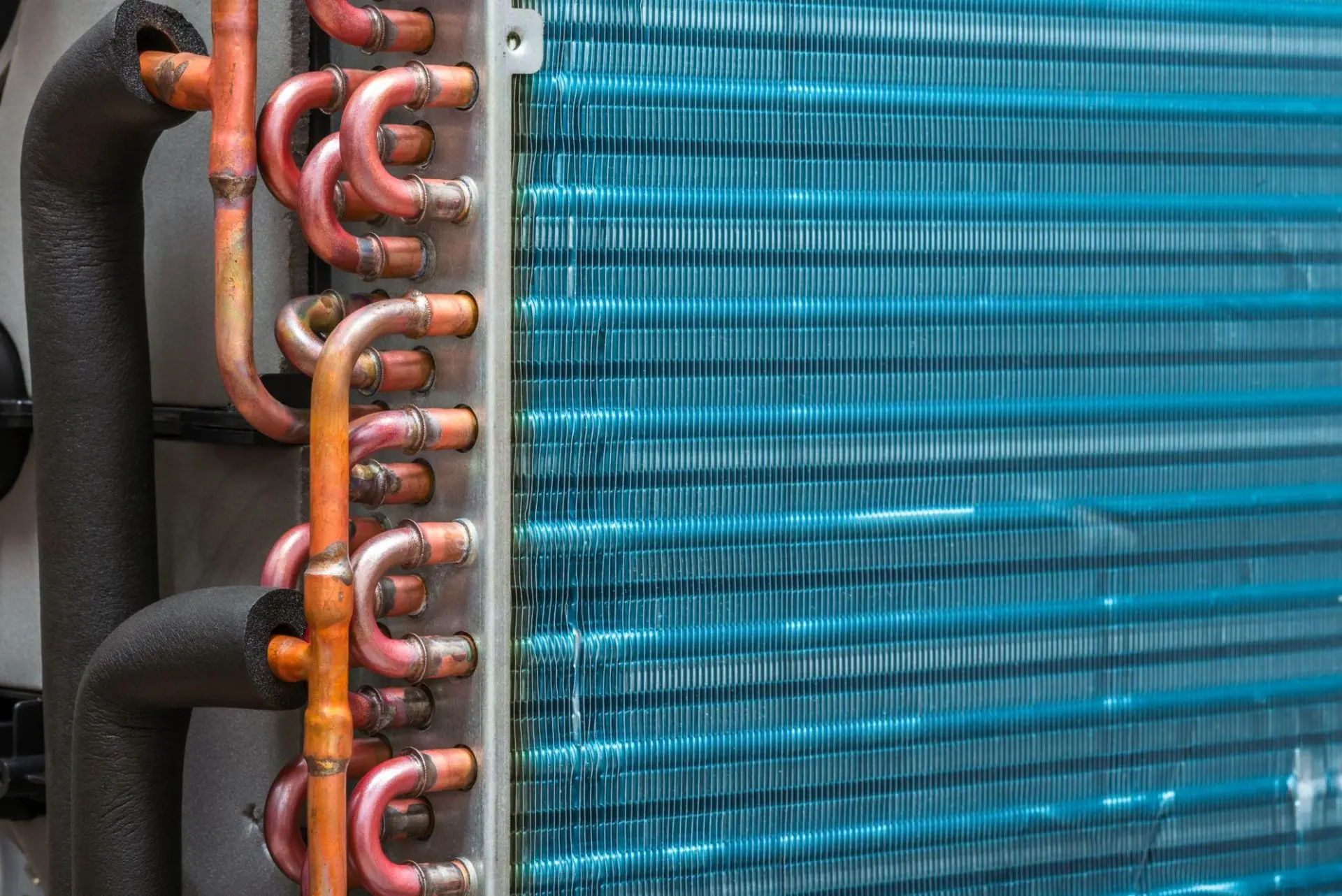
An Air Handling Unit (AHU) conditions air using chilled water supplied by the chiller.
AHU Cooling Process:
- Return air mixes with fresh air.
- Air passes through filters.
- Air moves across a chilled water coil.
- Heat transfers from air to water.
-
Supply air is distributed via ductwork.
Critical AHU Performance Factors:
- Coil design and surface area
- Airflow rate
- Water flow rate
- Leaving air temperature setpoint
- Static pressure control
Fan energy is a major driver of system consumption. Because fan power follows the cube law:
A 20% reduction in airflow can reduce fan energy by nearly 50%.
Without variable speed control, AHUs often operate inefficiently at constant volume.
4.
How RTUs Differ from Chilled Water Systems
A Rooftop Unit (RTU) is a self-contained system combining:
- Compressor
- Condenser
- Evaporator
- Fan
- Controls
Unlike chilled water systems:
- RTUs use direct expansion (DX).
- No central chiller or water distribution loop is required.
-
Refrigerant circulates directly to the coil.
RTU Advantages:
- Simpler installation
- Lower upfront complexity
-
Ideal for mid-sized buildings
RTU Limitations:
- Less scalable for large campuses
- Limited centralised optimisation
- Potentially higher maintenance for multiple distributed units
5.
The Hidden Energy Drivers: Pumps, Fans & Control Strategy
The Engineering Mindset article explains the mechanical relationships well, but the real performance of HVAC systems depends on energy drivers beyond the equipment itself.
Pump Energy
Chilled water pumps circulate water through the system.
Inefficient design may include:
- Constant speed pumps
- Oversized pump selection
- Poor differential pressure control
Variable speed pumps dramatically reduce energy usage in part-load conditions.
Fan Energy
Supply and return fans in AHUs often consume more energy annually than expected.
Energy savings opportunities include:
- Static pressure reset
- Demand-controlled ventilation
-
Night setback strategies
Control Strategy: The Real Efficiency Factor
Modern HVAC systems require:
- Chiller sequencing logic
- Pump differential pressure control
- AHU temperature reset
- Demand-based ventilation
- BMS integration
Without intelligent control, even high-efficiency chillers and AHUs underperform.
Components from manufacturers such as Danfoss (VSDs), Belimo (actuators), Sontay (sensors), and Siemens (controllers) enable advanced optimisation strategies.
6.
Advanced HVAC Control & System Optimisation
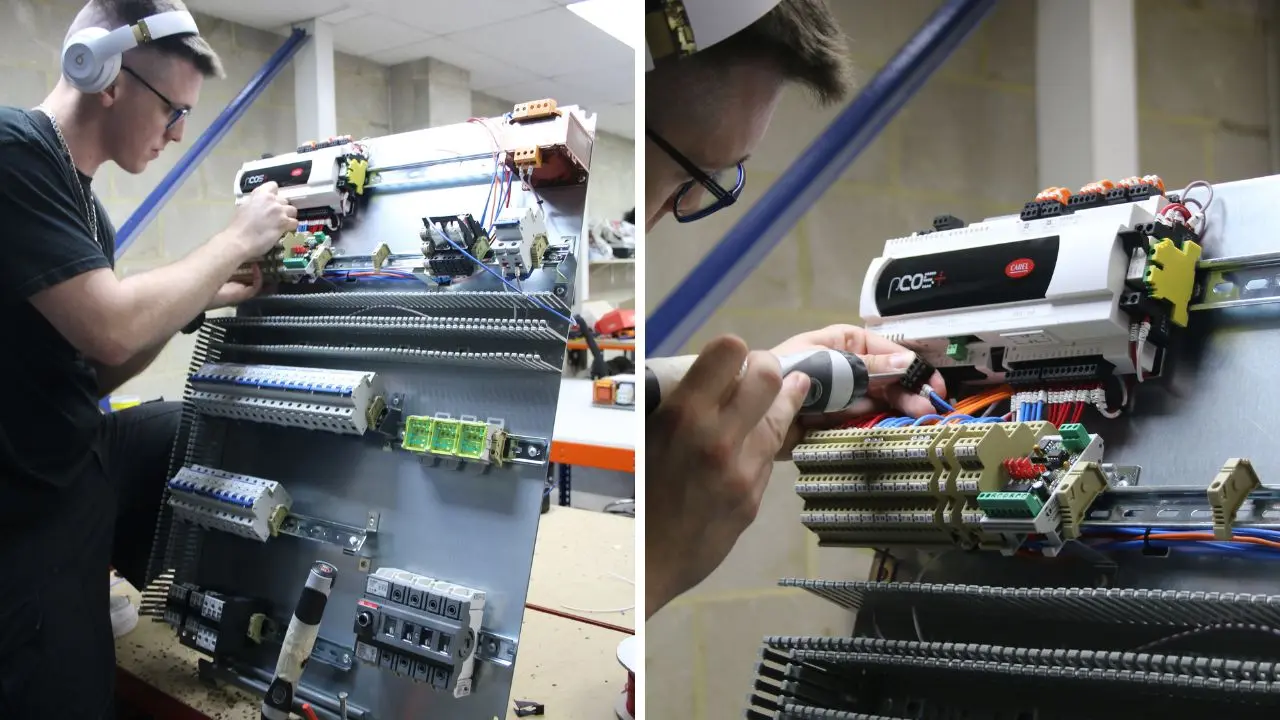
In large commercial systems, the control strategy determines:
- Seasonal efficiency
- Part-load performance
- Carbon intensity
-
Operating cost
Key Optimisation Strategies:
- Variable primary flow chilled water systems
- Chilled water temperature reset
- Static pressure reset in AHUs
- Demand-controlled ventilation (CO₂-based)
- Free cooling integration
- Fault detection and diagnostics (FDD)
Intelligent control integration can reduce total HVAC energy consumption by 20–40% compared to fixed-volume systems.
Our Controls Expertise
At iACS, we specialise in:
- AHU control panel manufacturing
- Chiller interface panels
- BMS integration
- HVAC optimisation upgrades
- Supplying over 6000 HVAC control components
We design control strategies that ensure:
- Efficient pump modulation
- Correct chiller staging
- Optimised airflow control
- Compliance with Part L
- Measurable performance improvements
Mechanical efficiency is only realised through intelligent control implementation.
7. Energy Efficiency & Compliance Considerations (UK Focus)
Commercial HVAC systems must comply with:
- Part L Building Regulations
- SBEM modelling
- BREEAM standards
- Net-zero carbon targets
Control strategies directly affect:
- Seasonal energy efficiency ratio (SEER)
- Specific fan power (SFP)
- Chiller coefficient of performance (COP)
- Carbon reporting
Without integrated controls, compliance modelling rarely matches operational performance.
8. Common Design & Commissioning Mistakes
- Oversized chillers operating at poor part-load efficiency
- Constant speed pumps
- Fixed-volume AHU fans
- No chilled water temperature reset
- Lack of BMS integration
- Poor sensor calibration
Most performance failures stem from control strategy, not equipment selection.
9. FAQs: Chillers, AHUs & RTUs Explained
How does a chiller work with an AHU?
The chiller cools water, which flows to the AHU coil. The AHU transfers heat from air to water.
What is the difference between an AHU and an RTU?
An AHU relies on central chilled water, while an RTU is a self-contained DX unit.
Which system is more efficient?
Large buildings typically benefit from central chilled water systems with advanced controls.
Why are HVAC controls important?
Controls optimise energy use, improve compliance and reduce operating costs.
Conclusion: Understanding the System Is Only Half the Story
Chillers, AHUs and RTUs each play distinct roles in HVAC systems. However, mechanical understanding alone is not enough.
The real determinants of performance are:
- Control strategy
- Part-load optimisation
- Pump and fan modulation
- System integration
Modern commercial buildings demand intelligent HVAC systems, not just installed equipment.
By combining robust mechanical design with advanced control expertise, building owners can significantly reduce energy costs while improving reliability and compliance.