
Air Handling Units (AHUs) are at the core of commercial and industrial HVAC systems. Designed to deliver precise temperature control, optimal indoor air quality and high energy efficiency, modern AHUs play a crucial role in offices, hospitals, retail centres, manufacturing plants and large-scale infrastructure projects.
Today’s AHUs are not simply air movers, they are engineered climate solutions that combine advanced mechanical design with intelligent control systems to meet strict environmental and performance standards.
This guide explores:
- What an AHU is and how it works
- Key features of modern AHU systems
- Applications across commercial sectors
- Energy efficiency and sustainability benefits
- The role of advanced AHU controls
What This Guide Covers
This article will explain:
- The function of Air Handling Units in commercial buildings
- How Air Handling Units integrate with chillers and heating systems
- The mechanical and control components that make AHUs efficient
- How intelligent AHU controls reduce energy consumption
- Why proper control panel design determines real-world performance
Table of Contents
- What Is an Air Handling Unit (AHU)?
- How Does an Air Handling Unit Work?
- Key Components of Air Handling Units
- Types of Air Handling Units (AHUs)
- Energy Efficiency in Modern Air Handling Units
- Intelligent AHU Controls & Control Panels
- Applications of Air Handling Units
- FAQs About Air Handling Units
- Conclusion
1. What Is an Air Handling Unit
(AHU)?
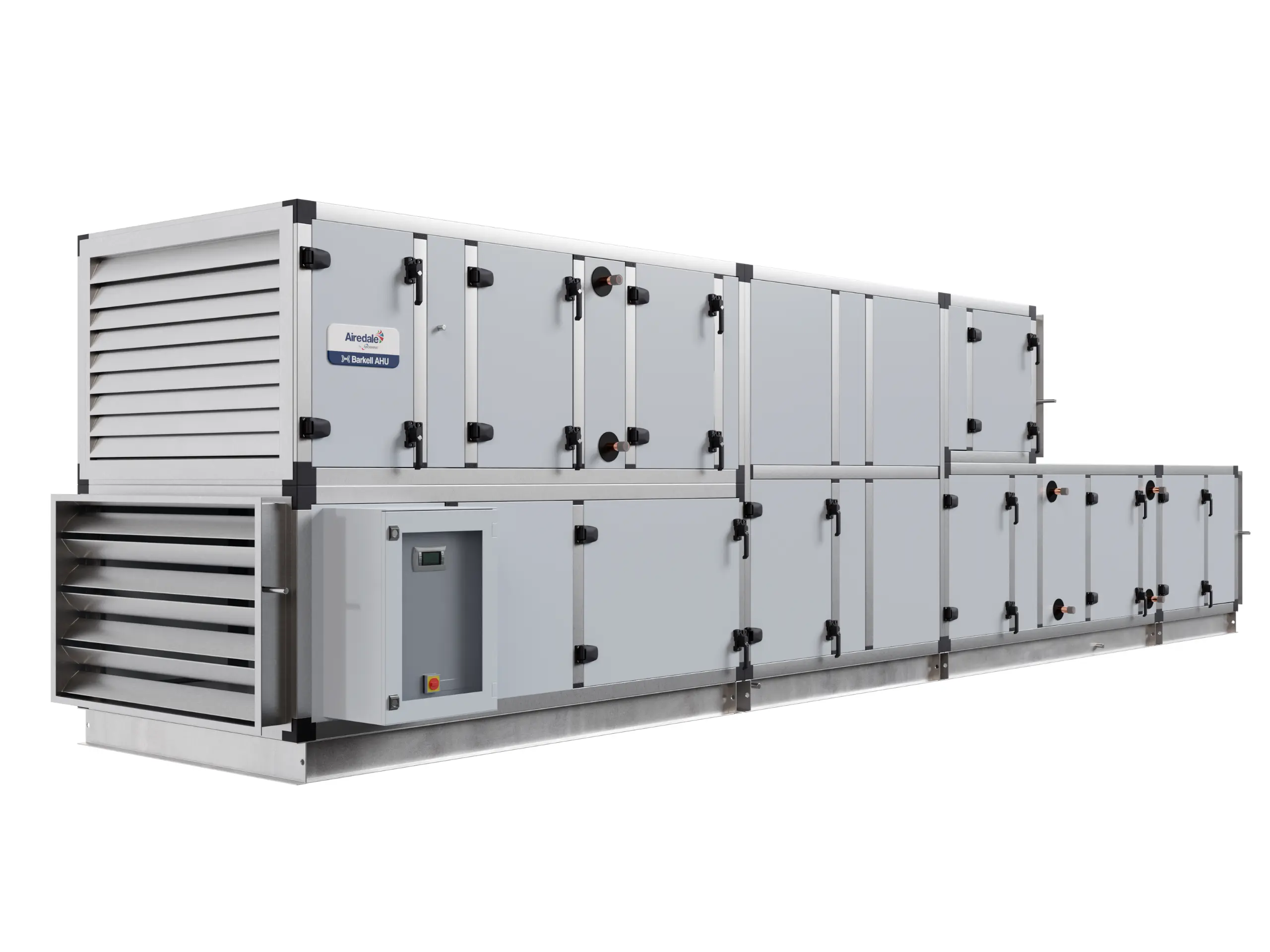
An Air Handling Unit (AHU) is a central HVAC component designed to condition and circulate air throughout a building.
Air Handling Units are typically connected to:
- Ductwork distribution systems
- Chilled water or DX cooling systems
- Boilers or heating circuits
- Building Management Systems (BMS)
The primary purpose of an AHU is to ensure indoor air is:
- Clean
- Properly ventilated
- Temperature-controlled
- Delivered at the correct airflow rate
Air Handling Units are commonly installed in commercial offices, healthcare facilities, retail centres, airports, data centres and manufacturing environments.
2. How Does an AHU Work?
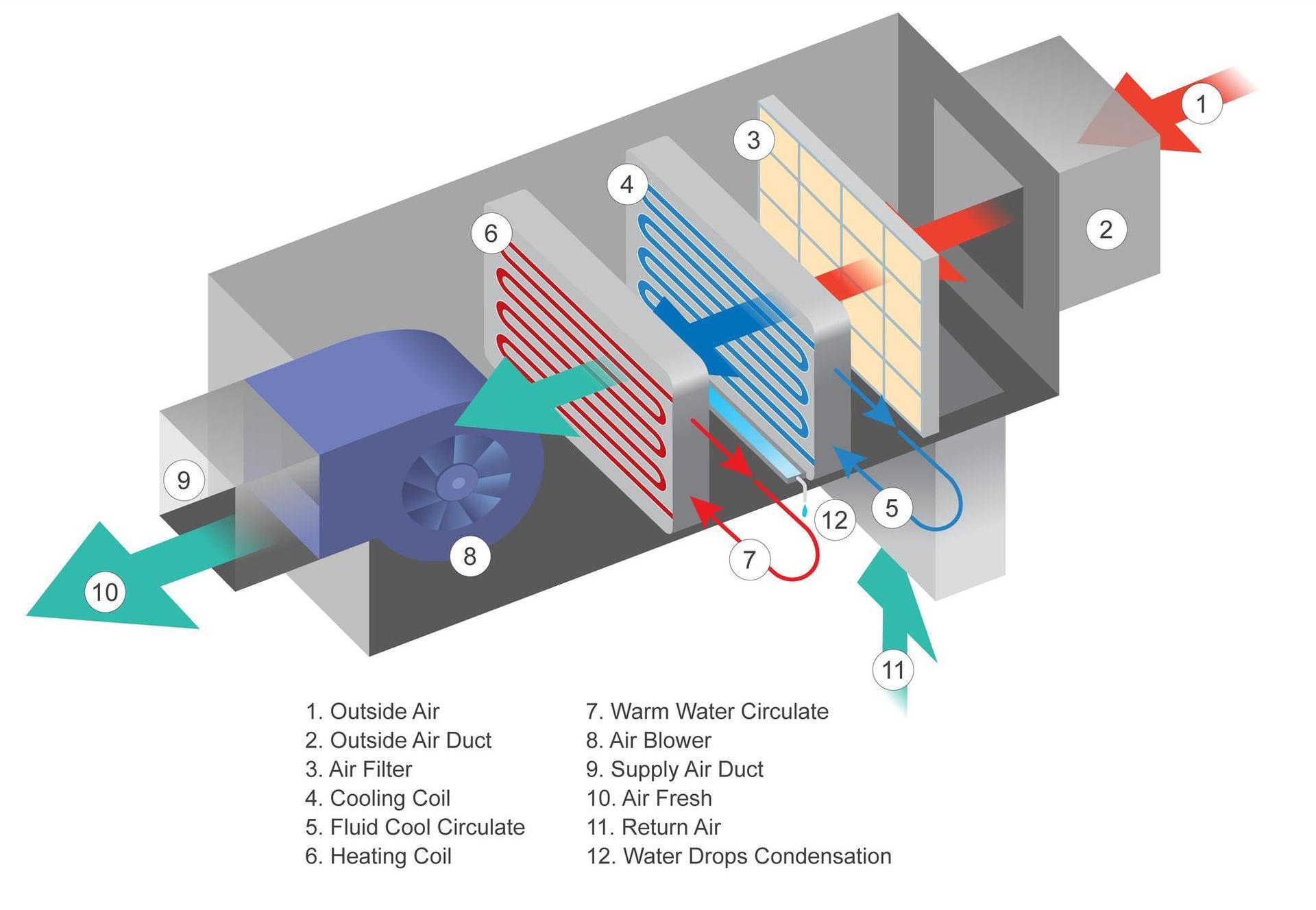
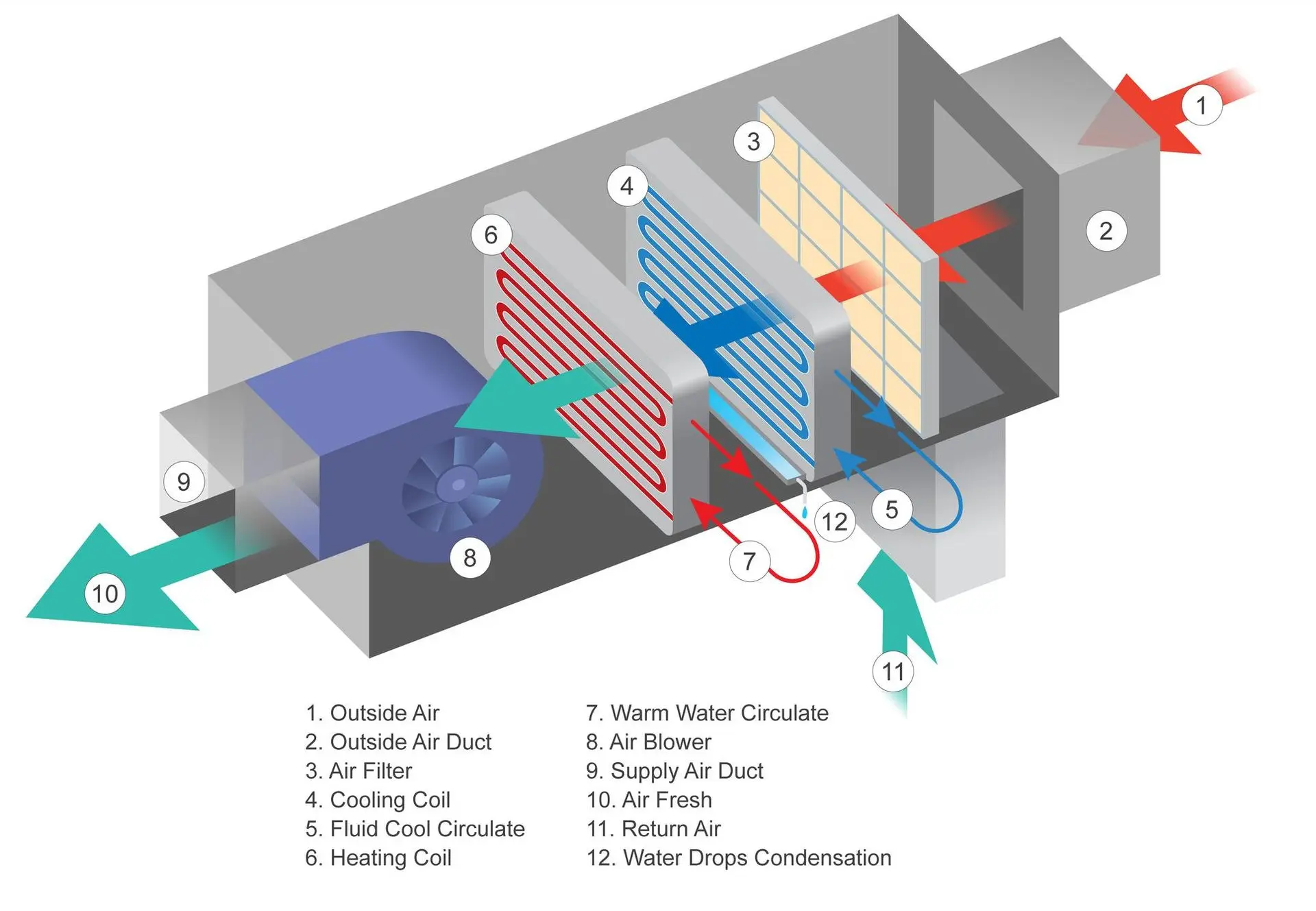
Understanding how an Air Handling Unit works requires following the airflow path through the system.
Step 1: Air Intake & Mixing
Fresh outdoor air enters the AHU and mixes with return air from the building. Motorised dampers regulate the proportion of fresh and recirculated air to maintain ventilation rates while reducing unnecessary heating or cooling demand.
Step 2: Filtration
Air passes through filter sections that remove:
- Dust
- Particulates
- Pollen
- Airborne contaminants
Modern Air Handling Units are designed to comply with ISO 16890 filtration standards, improving indoor air quality performance.
Step 3: Heating or Cooling
Air flows across heating or cooling coils:
- Cooling coils use chilled water or refrigerant
- Heating coils use hot water, steam or electric elements
Heat transfer occurs between the coil surface and the air, adjusting the supply air temperature to meet building setpoints.
Step 4: Air Distribution
High-efficiency fans distribute conditioned air into ductwork systems. Return air then flows back to the AHU to repeat the cycle.
This continuous process enables Air Handling Units to maintain stable environmental conditions across large buildings.
3. Main Components of an AHU
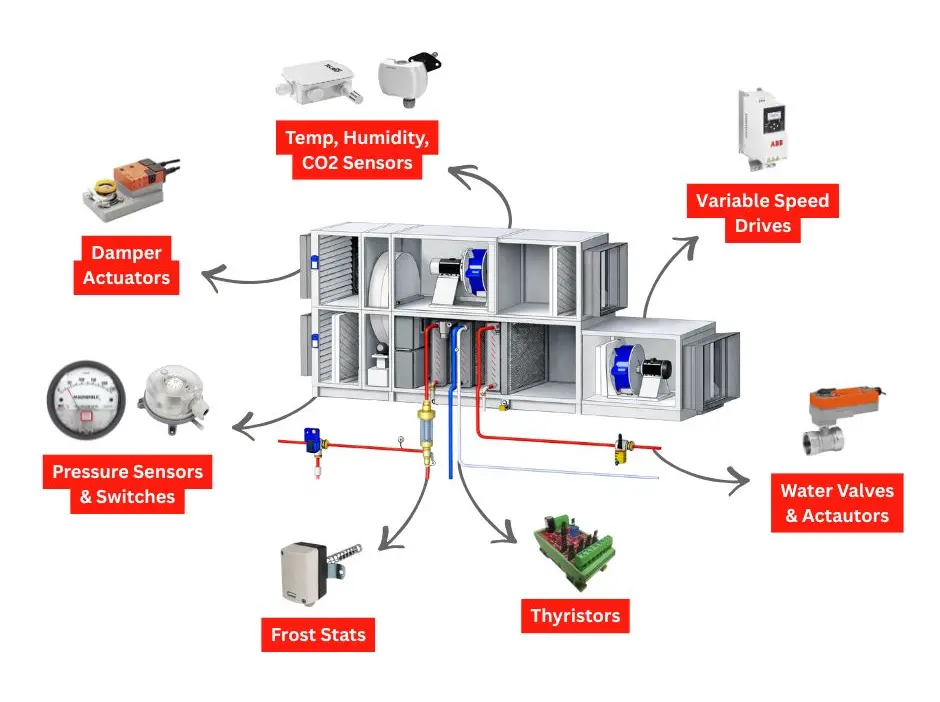
An Air Handling Unit is not just a mechanical assembly, it is a fully integrated electro-mechanical system. The performance of an AHU depends on both its physical air-handling components and the intelligent control devices that regulate them.
Below, we break down the key AHU components, including the control devices highlighted in the image.
3.1 Temperature, Humidity & CO₂ Sensors
Sensors are the foundation of any AHU control strategy.
These typically include:
- Supply air temperature sensors
- Return air temperature sensors
- Outside air temperature sensors
- Humidity sensors
- CO₂ sensors (for demand-controlled ventilation)
Why They Matter
These sensors provide real-time environmental data to the AHU control panel. The controller compares measured values against setpoints and adjusts system operation accordingly.
For example:
- If supply air temperature is too high → cooling valve opens
- If CO₂ rises above threshold → fan speed increases
- If humidity exceeds limits → dehumidification increases
Without accurate sensing, efficient AHU operation is impossible.
High-quality sensors from manufacturers such as Sontay ensure reliable environmental monitoring in commercial installations.
3.2 Variable Speed Drives (VSDs)
Fans are one of the largest energy consumers in an AHU. Variable Speed Drives (VSDs) regulate motor speed based on demand.
What VSDs Control
- Supply fan speed
- Extract fan speed
- Sometimes pump motors
Because fan power follows the cube law:
- Reducing fan speed by 20% can reduce energy consumption by nearly 50%.
VSDs from manufacturers like ABB and Danfoss are commonly integrated into AHU control panels.
Why VSDs Are Critical
Without VSD control, fans run at constant speed, leading to:
- Excess energy use
- Increased wear
- Higher operating costs
3.3 Water Valves & Actuators
Heating and cooling coils rely on modulating water flow.
Water control valves regulate:
- Chilled water flow (cooling coil)
- LTHW or hot water flow (heating coil)
Actuators adjust valve position in response to control signals.
How They Work
If supply air temperature is below setpoint:
- Heating valve opens proportionally.
If cooling demand increases:
- Cooling valve modulates open.
Manufacturers such as Belimo provide precision valve actuators widely used in AHU applications.
Accurate valve modulation prevents:
- Simultaneous heating and cooling
- Temperature instability
- Energy waste
3.4 Damper Actuators
Dampers regulate airflow through:
- Fresh air intake
- Return air mixing
- Exhaust air discharge
- Heat recovery bypass
Motorised damper actuators adjust blade position to control air volume and pressure.
Control Applications
- Fresh air optimisation
- Night purge mode
- Free cooling operation
- Smoke control strategies
Damper control plays a major role in energy efficiency and ventilation compliance.
3.5 Pressure Sensors & Pressure Switches
Pressure devices monitor:
- Duct static pressure
- Filter differential pressure
- Fan operation
-
Airflow verification
Why They Are Important
- Static pressure sensors allow fan speed modulation.
- Differential pressure switches confirm airflow.
- Filter pressure sensors indicate when filters require replacement.
Without pressure monitoring:
- Fans may overwork
- Filters may clog unnoticed
- Airflow may drop below design levels
3.6 Frost Protection Thermostats (Frost Stats)
In colder climates, heating coils are vulnerable to freezing.
Frost protection devices:
- Monitor coil temperature
- Trigger alarms
- Open heating valves fully
- Shut down supply fans if necessary
This protects the coil from burst damage and prevents costly downtime.
Frost protection logic is an essential part of AHU safety control sequences.
3.7 Thyristors (Electric Heater Control)
Where electric heating coils are installed, thyristor controllers regulate power output.
Unlike simple on/off switching, thyristors allow:
- Smooth modulation of electric heaters
- Reduced inrush current
- Improved temperature stability
This enables precise supply air temperature control without overshoot.
3.8 The AHU Control Panel (The System Brain)
All the components above are coordinated through the AHU control panel.
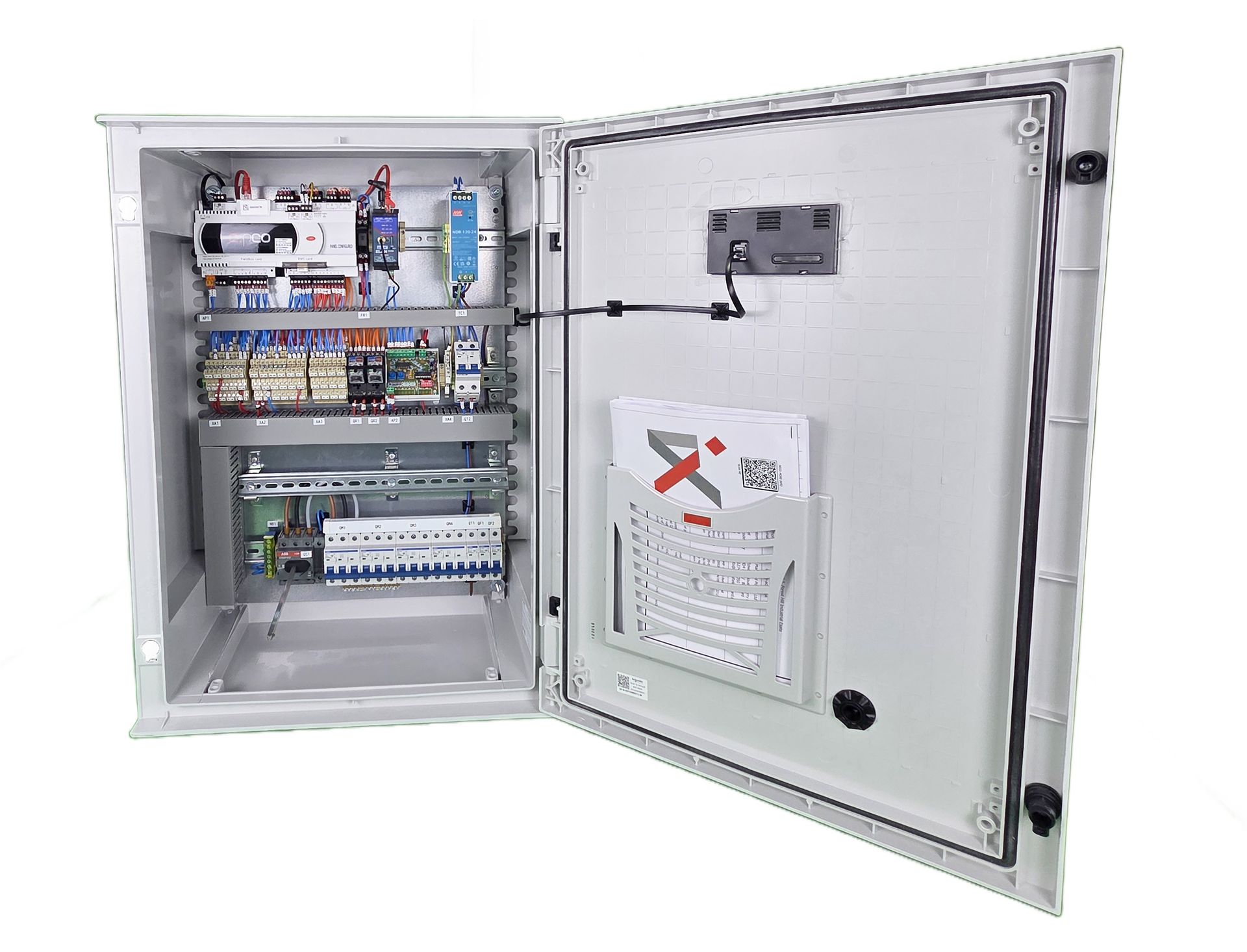
The control panel houses:
- PLC or digital controller
- Power supplies
- Contactors & relays
- Circuit protection
- VSD interfaces
- Communication modules (BACnet/Modbus)
- Terminal connections
What the Control Panel Does
- Processes sensor data
- Executes control algorithms
- Modulates valves and dampers
- Adjusts fan speeds
- Interfaces with BMS systems
- Logs faults and alarms
The mechanical AHU performs air treatment the control panel ensures it performs efficiently.
Poorly designed control panels can result in:
- Excess energy consumption
- Control instability
- Non-compliance with Part L
- Reduced equipment lifespan
Well-designed panels deliver:
- Energy optimisation
- Stable temperature control
- Demand-based ventilation
- Regulatory compliance
- Reduced operational costs
4.
Types of Air Handling Units
Modular Air Handling Units
Custom-built units assembled in sections. Ideal for large buildings.
Packaged Air Handling Units
Factory-assembled systems delivered ready for installation.
Rooftop Air Handling Units
Weatherproof units installed externally.
Hygienic AHUs
Designed for healthcare and pharmaceutical environments requiring strict hygiene control.
The selection of AHU type depends on airflow requirements, building layout and compliance standards.
5. Energy Efficiency in Modern Air Handling Units
Energy efficiency is a primary design consideration.
Key performance indicators include:
- Specific Fan Power (SFP)
- Heat recovery efficiency
- Pressure drop across filters
- Air leakage rates
- Coil performance
Because fan power consumption follows the cube law, reducing airflow by 20% can reduce energy consumption by nearly 50%.
Heat recovery systems significantly reduce heating demand in cold climates by reclaiming thermal energy from exhaust air.
Proper sizing and commissioning are critical to achieving projected energy performance.
6.
Intelligent AHU Controls & Control Panels
While mechanical components treat air, the control system determines how efficiently the AHU operates.
Modern AHU control panels manage:
- Fan speed via Variable Speed Drives (VSDs)
- Heating and cooling valve modulation
- Damper positioning
- Static pressure regulation
- Frost protection
- CO₂-based demand ventilation
- BMS communication (BACnet/Modbus)
Advanced controls allow:
- Variable Air Volume (VAV) operation
- Static pressure reset strategies
- Temperature reset optimisation
- Energy monitoring and diagnostics
Without intelligent controls, AHUs may operate inefficiently at constant speed, increasing energy costs.
Well-designed AHU control panels ensure optimal performance, reduced energy consumption and long-term reliability.
7. Applications of Air Handling Units
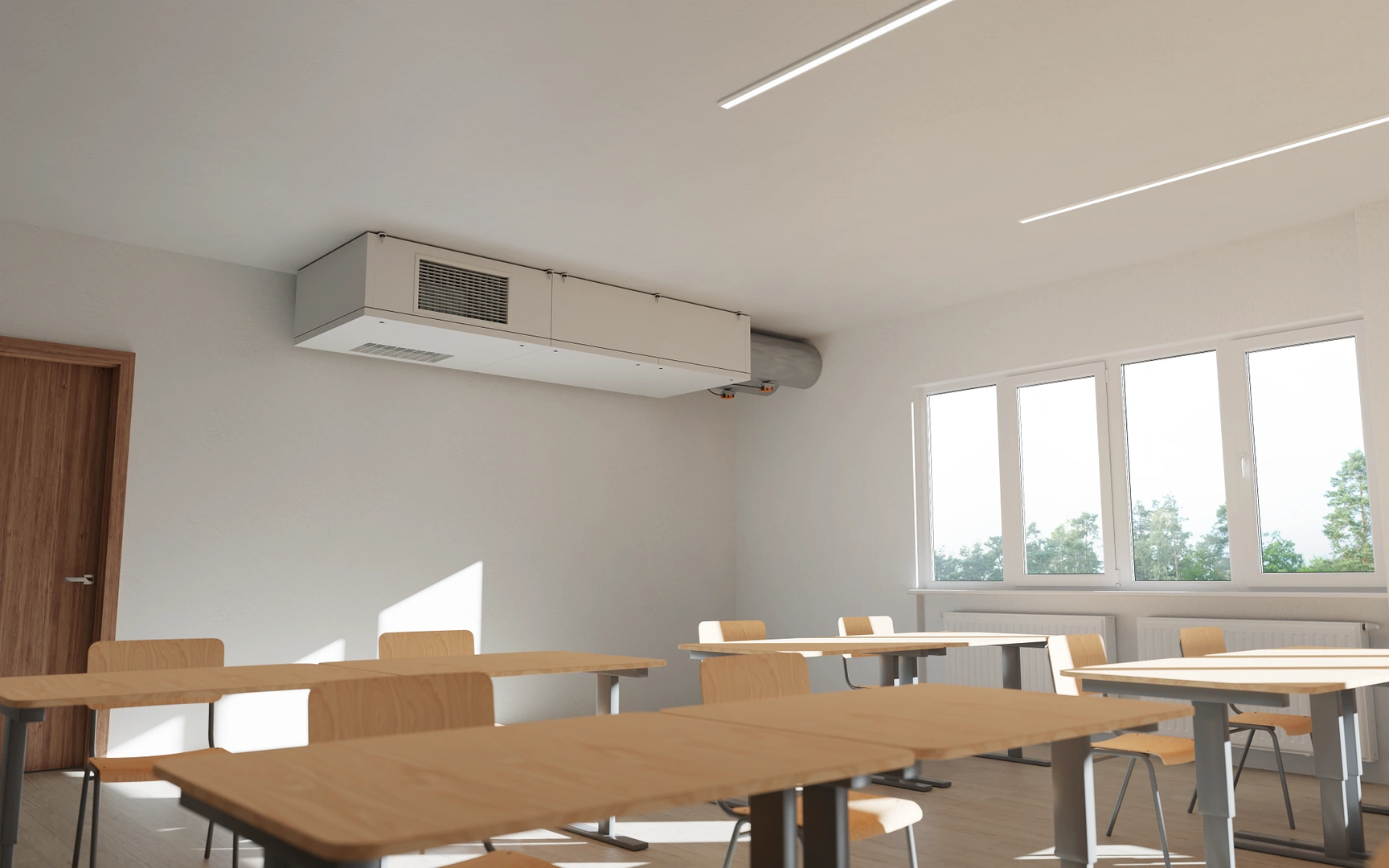
Air Handling Units are widely used in:
- Commercial office buildings
- Hospitals and healthcare facilities
- Airports and transport hubs
- Data centres
- Retail environments
- Industrial facilities
Each application requires tailored airflow rates, filtration levels and control strategies.
8. FAQs About Air Handling Units
What does an Air Handling Unit do?
An Air Handling Unit conditions, filters and distributes air while maintaining ventilation and temperature control.
How does an AHU differ from HVAC?
HVAC refers to the entire heating, ventilation and air conditioning system. The AHU is one key component within that system.
Are Air Handling Units energy efficient?
Yes, particularly when equipped with heat recovery and variable speed control.
Why are AHU control panels important?
AHU control panels regulate airflow, temperature and energy use to ensure efficient operation and compliance.
Can upgrading AHU controls improve efficiency?
Yes. Retrofitting advanced control panels can significantly reduce energy consumption without replacing the entire unit.
9. Conclusion: Air Handling Units Combine Engineering with Intelligent Control
Air Handling Units are essential to maintaining comfortable, healthy and energy-efficient buildings. From filtration and temperature regulation to airflow management and ventilation compliance, AHUs perform multiple critical functions.
However, true performance is only achieved when advanced control systems are integrated correctly.
By combining high-quality mechanical design with intelligent AHU control panels, buildings can achieve:
- Lower energy consumption
- Reduced carbon emissions
- Improved indoor air quality
- Reliable long-term performance
Understanding both the mechanical and control aspects of Air Handling Units is fundamental to delivering modern, high-performance HVAC systems.